Booed, Protested, and Terrified Athletes at the 2026 Winter Olympics — Is America Great Again?


The 2026 Winter Olympics in Milan were meant to be a celebration of athletic excellence, international cooperation, and the Olympic spirit that transcends borders. Instead, the opening ceremonies became a striking demonstration of America's eroding soft power on the global stage. When Vice President JD Vance appeared on stadium screens during the Parade of Nations, the response was unmistakable: a chorus of boos and jeers that echoed through Milan's San Siro Stadium. This wasn't just about one moment of disapproval—it was a crystallization of deeper tensions about American policy, freedom of expression, and the role of soft power in international relations.
The Milan Olympics have become an unintended case study in how nations project—or fail to project—their values and influence abroad. From tens of thousands of Italian citizens protesting in the streets against U.S. Immigration and Customs Enforcement agents, to NBC's controversial handling of crowd reactions, to President Trump attacking American athletes for exercising their First Amendment rights, the Games have laid bare fundamental questions about democracy, dissent, and the soft power that once made America a beacon of hope around the world.
The Currency of Soft Power
Soft power, a term coined by political scientist Joseph Nye, refers to a nation's ability to attract and co-opt rather than coerce. Unlike hard power—military might and economic sanctions—soft power operates through cultural influence, political values, and the attractiveness of a nation's policies and ideals. The Olympics have traditionally been one of the premier venues for soft power projection, where nations showcase not just their athletic prowess but their values, culture, and vision for the world.
For decades, the United States wielded enormous soft power. American democracy, human rights advocacy, and cultural exports—from Hollywood to jazz—made the nation aspirational. When athletes stood on Olympic podiums, they represented not just themselves but a set of ideals that resonated globally. But soft power is fragile. It requires consistency between stated values and actual policies. It demands moral authority that can be quickly squandered through hypocrisy or heavy-handed actions.
What happened in Milan represents a dramatic decline in American soft power. The approximately 10,000 Italian protesters who took to the streets with signs reading "ICE should be in my drinks, not my city" weren't just expressing opposition to a security arrangement—they were rejecting what America has come to represent under the current administration.
Milan's Streets Speak: The Significance of Italian Protests

The Italian protests against ICE presence at the Olympics were remarkable for several reasons. First, their scale and diversity—students, families with young children, elderly couples, and political leaders across the spectrum united in opposition. Milan Mayor Giuseppe Sala didn't mince words, calling ICE "a militia that kills, a militia that enters into the homes of people." These weren't fringe voices; they represented mainstream Italian sentiment.
The protests were directly triggered by videos circulating on social media showing ICE enforcement actions in Minneapolis that resulted in the deaths of two American citizens: Renee Macklin Good and Alex Pretti. Italian protesters held signs featuring photographs of these victims, demonstrating how social media has transformed the global consciousness.
An 18-year-old protester, Bruna Scanziani, captured the sentiment: "All the videos are public and everyone can see what's happening. The perception of America has changed."
This shift in perception matters enormously. Italy is a NATO ally, a G7 member, and historically one of America's strongest European partners. The fact that thousands of Italians would protest American security personnel at the Olympics—something that would have been routine and unremarkable at previous Games—signals a profound breach of trust. The protests weren't anti-American in the traditional sense; many protesters explicitly distinguished between their solidarity with American people and their opposition to current U.S. government policies.
The protesters organized around the symbolic date and location: Piazza XXV Aprile, named for April 25, 1945—Italy's liberation from Nazi fascism. This wasn't accidental. By invoking Italy's own history of resisting authoritarianism, protesters were making a powerful statement about what they saw happening in America. The parallels they drew between historical fascism and current U.S. immigration enforcement may seem extreme to some Americans, but their choice of venue demonstrates how seriously these concerns resonated in a country that knows firsthand the dangers of authoritarian governance.
The Sound of Silence: NBC's Controversial Coverage
When JD Vance and his wife appeared on screens during the opening ceremony, Canadian broadcaster CBC's commentators clearly heard and reported the crowd's negative reaction. "Oop...those are a lot of boos for him—whistling, jeering, some applause," CBC's Adrienne Arsenault noted. But American viewers watching on NBC heard something quite different: relative silence, with commentators simply identifying Vance without acknowledging the crowd's response.
NBC has categorically denied editing the audio, stating that both their live broadcast and primetime replay are available on Peacock for comparison. The network points to different audio mixes between broadcasts, suggesting technical rather than editorial differences. However, the perception of censorship—whether accurate or not—has become part of the story itself. In an era of declining trust in media institutions, the appearance of sanitizing an uncomfortable moment for political purposes damaged NBC's credibility, regardless of the technical explanations.
This controversy matters because it speaks to a larger question about how Americans understand their country's standing in the world. If major media outlets downplay or obscure international criticism of American leadership, citizens are deprived of crucial information about how U.S. policies are perceived globally. Soft power requires self-awareness; a nation cannot project attractive values if it cannot accurately assess how those values are being received.
The incident also highlights the role of social media in circumventing traditional media gatekeepers. Videos of the booing quickly went viral on X (formerly Twitter) and other platforms, with users comparing NBC and CBC coverage side by side. This democratization of information can be messy and prone to manipulation, but it also makes it harder for any single narrative to dominate. The controversy became not just about whether Vance was booed, but about media transparency and the responsibility of broadcasters to present unvarnished international reactions, even when they're uncomfortable.
The IOC's Impossible Position: Respect vs. Reality

Before the opening ceremony, International Olympic Committee President Kirsty Coventry found herself in an awkward position. Asked whether she would consider it "free speech" if Americans were jeered during the ceremony, given the "geopolitical backdrop" and Milan's mayor calling ICE agents "a militia that kills," Coventry diplomatically responded: "I hope that the opening ceremony is seen by everyone as an opportunity to be respectful of each other."
This response reflects the IOC's perpetual struggle to maintain political neutrality while operating in an inherently political arena. The Olympic Charter prohibits "political, religious or racial propaganda" at Olympic venues, yet the Games have always been deeply political. From Jesse Owens' victories in Nazi Germany to the Black Power salute in Mexico City, from the Munich massacre to boycotts of Moscow and Los Angeles, the Olympics have never existed outside politics.
Coventry's appeal for respect was well-intentioned but fundamentally misunderstood the nature of what was happening. The boos weren't simply rudeness or poor sportsmanship—they were a form of political expression by citizens responding to policies they found deeply troubling. By framing this as a matter of etiquette rather than legitimate political speech, the IOC risked appearing tone-deaf to genuine moral concerns.
Moreover, the IOC's position contained an inherent tension. If the Committee truly believed in the Olympic ideals of human dignity and universal values, shouldn't it be more concerned with the substance of Italian citizens' complaints about ICE enforcement than with whether those complaints were voiced politely? The request for respectful silence in the face of policies perceived as violent and unjust itself became political—a privileging of decorum over justice that many found troubling.
Athletes Find Their Voice: The Power and Peril of Speaking Out
"I'm racing for an American people who stand for love, for acceptance, for compassion, honesty and respect for others. I do not stand for hate or violence or discrimination," the post continued. Diggins, 34, grew up in Afton, Minn., less than an hour's drive from downtown Minneapolis.
American athletes at the Milan Games found themselves in an extraordinarily difficult position. When asked by reporters about representing the United States during the Trump administration's heightened immigration enforcement, several chose honesty over comfortable patriotic platitudes.
Freestyle skier Hunter Hess expressed what many were feeling: "It brings up mixed emotions to represent the U.S. right now, I think. It's a little hard. There's obviously a lot going on that I'm not the biggest fan of, and I think a lot of people aren't. I think for me, it's more I'm representing my friends and family back home, the people that represented it before me, all the things that I believe are good about the U.S. Just because I'm wearing the flag doesn't mean I represent everything that's going on in the U.S."
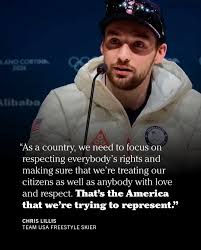
Fellow freestyle skier Chris Lillis spoke about being "heartbroken" by ICE enforcement actions: "I think that, as a country, we need to focus on respecting everybody's rights and making sure that we're treating our citizens as well as anybody, with love and respect. I hope that when people look at athletes compete in the Olympics, they realize that that's the America that we're trying to represent."
Figure skater Amber Glenn, making history as the first openly LGBTQ+ woman to compete in figure skating at the Olympics, addressed the struggles of her community under the Trump administration. Minnesota hockey player Kelly Pannek paused a post-game press conference to call ICE operations in her home state "unnecessary and just horrifying." Olympic gold medalist Jessie Diggins stated she was racing "for an American people who stand for love, for acceptance, for compassion, honesty and respect for others."

These athletes weren't making grandiose political statements or engaging in theatrical protests. They were simply answering questions honestly about their feelings. They distinguished between representing their country's ideals and endorsing specific policies they found troubling. They spoke about competing for their friends, families, and fellow Americans who share their values—a nuanced understanding of patriotism that goes beyond blind nationalism.
The athletes' statements reflected a sophisticated understanding of what it means to represent your country. True patriotism, they seemed to suggest, isn't about pretending everything is perfect—it's about caring enough to want your country to live up to its stated ideals. Their willingness to speak uncomfortable truths demonstrated exactly the kind of democratic values that once made America attractive on the world stage.
The President Attacks: When Leaders Punish Free Speech

President Trump's response to these athletes was swift and harsh. On Truth Social, he called Hunter Hess "a real Loser" and wrote: "If that's the case, he shouldn't have tried out for the Team, and it's too bad he's on it. Very hard to root for someone like this. MAKE AMERICA GREAT AGAIN!"
The backlash extended beyond Trump. Conservative figures including Jake Paul, Brett Favre, Rob Schneider, and Representative Byron Donalds piled on with criticism. Athletes reported receiving "a scary amount of hate/threats" for simply answering reporters' questions honestly. The U.S. Olympic and Paralympic Committee issued a statement acknowledging they were working to remove abusive content and report credible threats to law enforcement.
This response from the President and his supporters represents something far more troubling than a disagreement about policy—it's an attack on the fundamental democratic principle of free speech. Athletes who were asked direct questions and gave honest answers were branded as traitors and told to leave the country. The message was clear: dissent will not be tolerated, even when that dissent comes from Americans representing their country on the world stage.
Amber Glenn addressed this directly in her Instagram post, noting that she chose to "utilize one of the amazing things about the United States of America (Freedom of speech)" and was now receiving threats for it. She wrote: "I did anticipate this but I am disappointed by it. I will be limiting my time on social media for my own wellbeing for now but I will never stop using my voice for what I believe in."
The First Amendment Under Siege
The irony of the President and his supporters attacking athletes for exercising free speech cannot be overstated. The First Amendment protects exactly this kind of political expression—citizens criticizing government policies and actions. While the First Amendment technically constrains government action rather than private criticism, there's something deeply troubling about the nation's highest elected official using his platform to encourage harassment of citizens for speaking their minds.
This creates a chilling effect on speech. When athletes know that honest responses to reporters' questions will result in being branded as traitors by the President and subjected to waves of online abuse and threats, many will simply stay silent. This self-censorship achieves what explicit government censorship might not be able to accomplish—a narrowing of acceptable public discourse and a climate where dissent carries personal costs too high for many to bear.
The response also revealed a profound misunderstanding of what makes a nation strong. Countries that suppress dissent and demand unquestioning loyalty may appear unified, but that unity is brittle. Democratic societies that allow—and even encourage—criticism and debate are ultimately more resilient because they can identify and correct problems. The athletes who spoke out in Milan were exercising the very freedom that supposedly distinguishes American democracy from authoritarian systems.
Furthermore, the suggestion that athletes who express mixed feelings about current policies should "go live somewhere else" fundamentally misunderstands citizenship. Citizenship isn't contingent on approval of every government action—it's precisely the right to criticize and work toward change that defines democratic citizenship. The attitude that dissent equals disloyalty is far more alien to American democratic traditions than the dissent itself.
Terrified Athletes: When American Threats Echo Through the Olympic Village
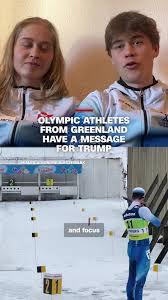
While American athletes faced backlash for speaking honestly about their country, athletes from Greenland found themselves competing under the shadow of American threats against their homeland. The story of Ukaleq and Sondre Slettemark—Greenlandic siblings competing for Denmark in biathlon—adds another disturbing dimension to America's soft power collapse at the Milan Olympics.
Ukaleq Slettemark, 25, spoke to the Associated Press from the biathlon World Cup in Germany weeks before the Olympics, her voice carrying a fear that no Olympic athlete should have to experience. "It's terrifying," she said. "We are imagining the worst-case scenario and my aunt is having trouble sleeping at night. My mom, yesterday, she broke down at the stadium crying because she's so afraid." The source of this fear? President Trump's repeated declarations that the United States "needs" to take over Greenland, the autonomous Danish territory where the Slettemarks were born and raised.
The Slettemark siblings compete for Greenland in the World Cup circuit, but because Greenland is not a sovereign nation with its own Olympic committee, they represent Denmark at the Olympics. This quirk of Olympic governance means they carry two identities—Greenlandic by birth and heritage, Danish by Olympic necessity. But in Milan, they carried something heavier: the weight of being athletes whose homeland is actively threatened by the country that claims to champion freedom and democracy.
Ukaleq, who competed for Denmark in the 2022 Beijing Olympics, comes from a biathlon dynasty. Her father, Øystein Slettemark, competed in the 2010 Winter Olympics; her mother, Uiloq, founded the Greenland Biathlon Federation. Her younger brother Sondre, competing in his first Olympics, had won the Globe as the best Junior Mass Start Athlete in the world. Biathlon—cross-country skiing combined with rifle shooting—demands extraordinary focus and composure. But how do you maintain that composure when your country's existence as you know it is under threat?
"People are talking about maybe they have to leave Greenland because they feel it's so unsafe," Ukaleq told reporters. "So we are terrified and we are really angry because this is not how you talk to another country, this is not how you talk to your allies. And we feel so disrespected and very scared."
The irony is profound: Greenland is part of Denmark, a founding NATO member and one of America's closest allies. Yet Trump's rhetoric—refusing to rule out military force to acquire Greenland—has turned allies into adversaries and athletes into symbols of American aggression.
At the Milan Olympics, the Slettemark siblings made a point of emphasizing their unity with Denmark. "For this Olympics I think we feel very proud to race for Denmark and show the world that Greenland and Denmark are standing strong together despite everything that's happening," Ukaleq said. But this pride was laced with anxiety. Sondre noted that seeing NATO soldiers and Denmark's military deployed in Greenland—a normally peaceful territory—in response to American threats had been "shocking."
The fear the Slettemarks expressed wasn't abstract geopolitical concern—it was deeply personal. Fellow athletes asked them daily how they were holding up. The U.S. threats followed them everywhere, from training facilities to competition venues. Yet Ukaleq was careful to distinguish between the American government and American people: "I'm very good friends with the U.S. athletes. I think they're all really nice people." This grace under pressure stands in stark contrast to how American athletes speaking out were treated by their own President.
Perhaps most chilling was Ukaleq's comparison of Trump's Greenland threats to Russian President Vladimir Putin's aggression in Ukraine. Russia was banned from the Olympics following its 2022 invasion of Ukraine. Ukaleq revealed that she'd overheard people on the biathlon circuit wondering if the same should happen to the United States if it forcefully took over Greenland. "I've definitely thought so myself," she admitted, "but we're not at that stage right now, because nothing has happened yet. But if it were to happen, then I would also agree that that would be the right way to do it."
This statement deserves careful consideration. An Olympic athlete—someone who embodies the values of peaceful competition and international cooperation—was seriously contemplating whether her American friends and competitors should be banned from future Olympics due to their government's actions. The fact that this conversation was even happening represents a catastrophic failure of American diplomacy and soft power. The United States, which helped establish the post-World War II international order built on opposition to territorial conquest, was now being discussed in the same breath as Putin's Russia.
The Greenland situation also exposed the selective nature of international outrage and Olympic politics. When Russia invaded Ukraine, the response was swift and unified—Russian athletes were barred from competing under their flag. But Trump's threats against Greenland, while short of actual military action, created a similar climate of fear and intimidation. The IOC's appeal for "respect" at the opening ceremony rang hollow when one of the world's superpowers was openly discussing acquiring sovereign territory through force or economic coercion.
Ukaleq Slettemark appealed directly to the American people, hoping they would pressure Congress to stop the Greenland takeover plan. She recognized that many Americans likely oppose their government's aggressive posture, just as many American athletes at the Olympics expressed discomfort with U.S. policies. But her plea highlights a troubling reality: by the time citizens in a democracy mobilize to stop their government's worst impulses, the damage to international relationships may already be irreparable.
The Milan Olympics were supposed to be a moment of triumph for the Slettemark family—both siblings competing on the world's biggest sporting stage, representing the biathlon tradition their parents had built in Greenland. Instead, they found themselves as unwitting symbols of American imperial ambition and the anxiety it creates among smaller nations. Their racing suits, adorned with Inuit designs including eagle talons, ravens, and the Northern Lights, celebrated Greenlandic culture. But that culture was under threat from a country that once championed the self-determination of peoples around the world.
The contrast between the treatment of American and Greenlandic athletes at these Olympics couldn't be starker. American athletes who expressed honest concerns about their country faced presidential attacks and death threats. Greenlandic athletes whose country was actively threatened by the President tried to maintain focus on competition while their families broke down crying in fear. Both groups were casualties of the same soft power collapse—the transformation of the United States from a nation that inspired emulation to one that inspires fear.
Greenland's population is roughly 57,000 people—smaller than many American cities. The idea that this Arctic territory, with its rich Inuit culture and strategic location, should become the subject of aggressive acquisition talk in 2026 seems like a throwback to 19th-century imperialism. Yet here were two young athletes, products of a peaceful sporting tradition, forced to contemplate whether their friends and competitors might soon represent a nation that had conquered their homeland.
The Cost of Lost Soft Power

The events at the Milan Olympics illustrate how quickly soft power can erode. Just a few years ago, American athletes on Olympic podiums represented democratic values that much of the world aspired to. Today, those same athletes face hostility from their own government when they express those values honestly. The Red Ring of kindness is abundant in the athletes but missing in the current US Administration.
The cost of this erosion extends far beyond hurt feelings or diplomatic awkwardness. Soft power is strategic currency in international relations. It influences whose cultural products are consumed globally, whose educational institutions attract top talent, whose alliances are sought, and whose vision of the future seems most compelling. When America's soft power declines, so does its ability to shape global norms and build coalitions around shared values.
The Italian protests demonstrated that America's actions are being closely watched and judged. The fact that footage of ICE enforcement in Minneapolis could spark protests in Milan shows how interconnected our world has become. Terrified athletes from Greenland, fearful of a US evasion.
American soft power was never built on pretending to be perfect—it was built on the promise of striving toward ideals of freedom, equality, and justice. When those promises ring hollow, when freedom of expression is met with presidential attacks, when enforcement actions result in citizen deaths without accountability, the soft power foundation crumbles.
Rebuilding soft power is far harder than losing it. Trust, once broken, takes years or even generations to restore. Every time an American athlete faces backlash for honest speech, every time protesters abroad see U.S. policies as worthy of resistance, every time allies question American commitment to its own stated values, the soft power deficit grows larger.
The Olympics as Mirror
The 2026 Winter Olympics in Milan have served as an uncomfortable mirror, reflecting back to Americans how much the country's global standing has changed. The boos that greeted JD Vance, the protests that filled Milan's streets, the athletes speaking uncomfortable truths, and the harsh response from leadership—all of these elements combine to paint a picture of a nation in crisis about its own identity and values.
The fundamental question raised by these events is whether America still believes in the democratic values it claims to champion. A commitment to free speech means accepting—and even protecting—speech we disagree with. A commitment to human rights means holding our own institutions accountable when they fail. A commitment to democracy means allowing dissent without punishment.
The athletes who spoke out in Milan embodied American values more authentically than those who attacked them. They showed that patriotism isn't about blind allegiance—it's about caring enough to want your country to be better. They demonstrated the courage it takes to speak truth when silence would be easier. They reminded the world that American citizens still exist who believe in the values that once made their country admired globally.
The Olympics will continue for another week, with athletes competing for medals and national glory. But the real competition happening in Milan isn't on the slopes or the ice—it's a competition between different visions of what America represents and should represent. The boos from the stadium, the protests in the streets, and the brave voices of athletes refusing to stay silent all suggest that the world is watching closely. The question is whether America is listening.
Soft power, ultimately, is earned through consistency between values and actions. It cannot be manufactured through propaganda or demanded through intimidation. The road back to American soft power runs through honest reckoning with current failures, recommitment to democratic principles, and the courage to allow free speech—even when that speech is critical. Until then, the boos will continue, and America's influence in the world will keep diminishing, one Olympic ceremony at a time.
The Dangerous Question: What Happens When They Come Home?
As these brave Olympic athletes prepare to return home from Milan, a chilling question hangs in the air: what awaits them? The Trump administration has demonstrated a disturbing pattern of wielding federal agencies as weapons against those who dare to speak out. ICE, the IRS, the Department of Justice, and other government institutions—traditionally designed to serve and protect Americans—have increasingly been repurposed as tools of retaliation against critics and dissidents.
ICE as a Political Weapon: The Immigration and Customs Enforcement agency has been transformed into something far beyond its original mandate. While ostensibly focused on immigration enforcement, ICE operations in Minneapolis resulted in the deaths of two American citizens—Renee Good and Alex Pretti—whose "crime" was apparently protesting federal actions. The administration has deployed over 2,400 DHS agents to Minnesota alone, targeting not just undocumented immigrants but creating an atmosphere of intimidation in communities that have voiced opposition to administration policies. When Minnesota's governor criticized these operations, the administration intensified them. The message is unmistakable: dissent will be met with overwhelming force, and citizenship provides no protection when you're deemed an enemy of the state.
The IRS as an Instrument of Intimidation: The administration's attempts to weaponize the Internal Revenue Service represent an even more insidious threat. In August 2025, the IRS transferred over 47,000 taxpayer addresses to ICE—a clear violation of taxpayer privacy protections that has only been halted by federal court intervention. This unprecedented information-sharing arrangement would allow the government to target individuals based on their tax records, creating a surveillance infrastructure that can be aimed at anyone who falls out of favor. The chilling effect is obvious: when the agency that collects your taxes can share your personal information with enforcement agencies conducting military-style operations, the power to audit becomes the power to intimidate. For athletes who spoke out in Milan, the threat of an IRS investigation—with all its financial and reputational costs—looms as a very real possibility.
The Department of Justice Becomes Personal: Perhaps most alarming is the administration's corruption of the Department of Justice. Former FBI Director James Comey and New York Attorney General Letitia James were both indicted in September 2025 after President Trump publicly demanded their prosecution on social media. The U.S. Attorney who initially resisted these prosecutions, Erik Siebert, was forced out and replaced with Lindsey Halligan, a Trump personal attorney with no prosecutorial experience. Senator Adam Schiff faces ongoing investigation for alleged mortgage fraud—allegations that federal prosecutors in Maryland have privately indicated lack sufficient evidence for charges, yet the investigation continues under pressure from Trump appointees.
These prosecutions followed a September 20, 2025 Truth Social post where Trump wrote: "They're all guilty as hell, but nothing is being done. What about Comey, Adam 'Shifty' Schiff, Leticia??? JUSTICE MUST BE SERVED, NOW!!!" Within days, indictments followed. While a federal judge ultimately dismissed the Comey and James indictments in November 2025, finding the prosecutor was unlawfully appointed, the damage was done—millions in legal fees, months of stress, and careers under a cloud of suspicion, all because they criticized the President.
The pattern is clear and terrifying: speak out against the administration, and the full weight of the federal government may descend upon you. More than 100 prosecutors and career lawyers have resigned from the DOJ since Trump returned to office—an unprecedented exodus driven by political interference and pressure to drop cases involving Trump allies while pursuing his enemies. Ed Martin, the Trump loyalist appointed to lead the DOJ's "Weaponization Working Group," openly promised to "name and shame" those who couldn't be charged with crimes. When that tactic proved insufficient, actual prosecutions followed.
For Hunter Hess, Chris Lillis, Amber Glenn, and the other athletes who dared to speak honestly in Milan, the return home carries genuine risk. They have already faced death threats, online harassment, and presidential condemnation.
But history suggests the retaliation may not stop there.
An unexpected IRS audit.
A sudden ICE investigation into family members.
A DOJ inquiry into some long-forgotten technical violation.
The possibilities are endless when federal agencies become instruments of personal revenge rather than impartial enforcers of law.
The irony is profound: these athletes went to Italy representing American values of free speech and democracy, only to be met with hostility from their own government for exercising those very freedoms. Meanwhile, in Milan, tens of thousands of Italians protested in solidarity with American ideals that the American administration itself seems determined to suppress. The soft power that once made America a beacon of freedom worldwide has been inverted—now it's foreign citizens who must remind Americans what their country is supposed to stand for.
The question isn't whether these athletes will face retaliation—the administration's track record makes that almost certain. The question is what form that retaliation will take, and whether American institutions are strong enough to resist their own corruption. When former FBI directors can be indicted for criticizing the President, when state attorneys general face federal prosecution for winning cases against Trump, when senators are investigated on questionable evidence after voting to convict him in impeachment trials, what protection do ordinary citizens have? What shield exists for athletes whose only "crime" was answering reporters' questions honestly?
The Milan Olympics have revealed not just America's eroding soft power abroad, but the active dismantling of democratic norms at home. As these athletes return from Italy, they carry not just memories of competition but the burden of having spoken truth to power in an era when truth-telling has become dangerous. Their courage in Milan may yet be tested more severely in America—not by opposing teams on Olympic courses, but by their own government in courtrooms, audit offices, and immigration proceedings.
The world is indeed watching. But it's watching not just the Olympics, but whether American democracy can survive an administration that treats dissent as treason and wields government agencies as weapons against its own citizens. These athletes spoke up for American values when it mattered. The test now is whether America will protect them—or prove that those who warned about creeping authoritarianism were right all along.
Booed, Protested, and Terrified Athletes at the 2026 Winter Olympics. Free speech threatened and news media edited.
Is America Great Again?


Comments